Is tow service really necessary? Do you need a tow truck to take your vehicle home or to a garage if it breaks down and can’t be driven? In the past, many drivers would pull the vehicle themselves using another vehicle. While this still happens occasionally, it’s not recommended and for good reason.
There are many things that can go wrong that can create a lot of problems for you and the person driving the other vehicle and that’s why a tow service is so important. If you break down, your best and safest option is to call your roadside assistance north las vegas representative and have them send out a dependable towing service to get you and your vehicle off the road.
So why is pulling your vehicle with another one not a good idea? The first reason is that if you don’t hook it up just right and use large, strong chains to hook them together, the vehicle could come lose. If this happens, it can veer off the road and go over an embankment or hit a tree and cause even more damage. Even worse, it could veer into the opposite lane and hit another vehicle or stop dead in the road where someone behind you could hit it.
Another reason using a towing service is important is because you can cause damage to the back end of the vehicle doing the pulling and the front end of the one being towed if they hit. It’s very hard to keep the two vehicles going the same speed and very easy for the towed vehicle to crash into the one pulling it causing damage to both automobiles. It’s also difficult to steer many vehicles when they are not running, which makes it difficult to keep the towed vehicle in the road.
If the engine of the vehicle doing the towing is not larger than the one being towed, you run the risk of putting too much strain on the vehicle and this could cause the transmission to start slipping or even cause the engine to blow.
You also have to consider that in some areas, towing a vehicle with anything other an actual tow truck is illegal. It’s considered a dangerous practice that can put other drivers in jeopardy. If you’re in one of these areas, you run the risk of being ticketed and that could cost you a lot of extra money. Most likely, it will be much more than a roadside assistance plan with tow service would cost.
Using a tow service is important because it’s safe and it protects your vehicle. You won’t have to worry about any of the things listed above happening. Towing companies are experienced and they have all of the right equipment needed to get the job done in a fast and efficient manner. You don’t have to worry about making a mistake that could damage someone else’s property, your property or cause injury to someone because you were trying to save money by not calling a qualified towing company.
Don’t take the risk. Get roadside assistance with towing service and enjoy the feeling that having peace of mind brings. It’s a great feeling! Using a tow service is important and it will save you a lot of problems and headaches if and when you are stranded on the side of the road.
Towing is obviously big business in a country as big and riddled with roads, highways, and byways as America. The towing industry constitutes one of the main industrial lifelines of the country, and the efficiency of the nation’s traffic depends on towing service providers. Road authorities depend on a properly equipped and staffed towing fleet to keep the roads clear of wrecks that would hamper smooth traffic movement.
Probably the most prominent (and resented) towing service providers are the one connected to the police force and financial reclamation institutions – these are the providers that tow away vehicles after they have been impounded for law transgressions or nonpayment of dues.
The Internet abounds with the advertisements of towing services from all over the country. These handle every imaginable kind of towing contracts, from professional to do-it-yourself house moving and from the transport of industrial goods to the retrieval of road-wrecked vehicles.
It is important to ensure that the service provider is properly registered before finalizing an agreement. All registered towing atlanta services have provided extensive information about their businesses to the government, so there is no opportunity for price manipulation, theft, or unjustifiable delay in service. They are also insured, which means that any loss incurred due to their negligence will be made good to you.
Sea towing services constitute an important part of marine assistance, and every state’s coast guard has towing boats. The commercial kinds of sea towing services provide multiple-area towing, fuel drops, and emergency assistance such as jump starts for stalled engines and on-sea repairs of other vessels. They were an integral part of the recent rescue operations following Hurricanes Katrina and Rita, with the salvage operations of disabled craft relying solely on sea-towing services along the Gulf Coast region.
THE holiday hordes are back at work, so if you’re one of the lucky people not joining them, now is an ideal time to hit the road – for a cruise along the coast or something more ambitious such as a lap of the wide brown land.
All you have to do is hitch up the caravan and take off, right?
There’s a hitch: There are rules to follow and mistakes to avoid
Not quite. Some things in life on face value should be pretty straightforward – delve deeper and they’re anything but. Welcome to the dark and mysterious world of towing.
How difficult can it be? How many rules can you have for the simple act of dragging a trailer around? Surely you just buy a trailer or caravan that’s within your vehicle’s towing capacity?
The answers, in order, are: it’s more difficult than you think; lots; and no.
Mistakes can be painful, expensive and illegal. Here’s what you need to know.
IT’S ALL ABOUT THE MATHS
Your most important tool when deciding what tow vehicle, van or trailer to buy is a calculator, and your most important references are manufacturers’ specifications.
You need to do the numbers to make sure you comply with all weight limits, because if you have a crash and need to make an insurance claim, the first thing the insurance company will do is check. If you’re overweight, you’re illegal, so your claim can be rejected.
Within specification: Vehicle, trailer and load must not exceed complex limits
You can also be charged with a range of serious traffic offences, depending on which state you’re in.
Towing is governed by a complex web of maximum weight limits, primarily gross vehicle mass (GVM), gross trailer mass (GTM) and gross combined mass (GCM). See below, Towing Decoded.
DON’T TAKE A MAKER’S CLAIM AS GOSPEL
Manufacturers’ maximum towing weight claims are usually meaningless and you believe them at your peril. It’s ridiculous that makers can claim figures far in excess of the legal maximum that their fully laden vehicles can actually tow – but it’s common practice.
The legal maximum weight for your vehicle and trailer, hitched together, must be less than the combined, individual legal maximum weights for the vehicle and trailer.
Technically speaking then, gross combined mass must be less than the sum of gross vehicle mass and gross trailer mass.
Surely it’s a case of one plus one equals two? Not on Planet Towing, it’s not.
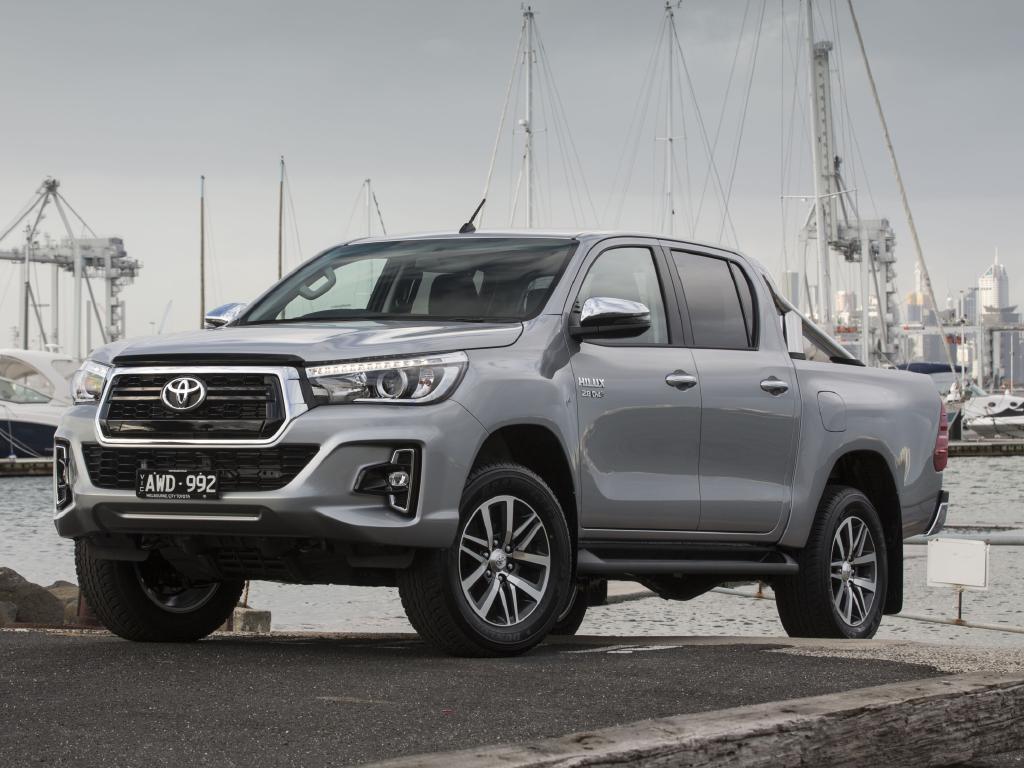
Toyota HiLux SR5: All-up weight limit is 5650kg
We’ll do a calculation using the top-selling Toyota HiLux SR5 automatic to illustrate the intricacies. For the figures on other popular utes and SUVs, see below – How Much Can They Really Tow?
The HiLux’s legal maximum gross combination mass is 5650kg. Its gross vehicle mass of 3000kg, plus its maximum claimed towing capacity of 3200kg, equals 6200kg – which is 550kg more than its legal maximum gross combined mass.
We’re assuming here (and in the other vehicles listed) that the HiLux is fully loaded to its GVM, which includes 955kg of payload.
If you’re buying a tow vehicle, look at its maximum gross combination mass. Deduct its gross vehicle mass. If you want to play it safe with a reasonable buffer for payloads, treat this weight as what you can safely and legally tow.
It will almost always be less than the manufacturer claims.
In the HiLux’s case, you subtract its 3000kg GVM from its 5650kg GCM, which leaves you with 2650kg to tow.
If you’re buying a trailer, deduct its aggregate trailer mass (ATM) from your tow vehicle’s gross combined mass.
If the result is significantly less than your gross vehicle mass, you need to choose a lighter trailer, or a new tow vehicle.
Again using HiLux, if you’re looking at a trailer with an ATM of 3200kg, subtract that from the GCM (5650kg) and you’re left with 2450kg – or 550kg less than HiLux’s actual GVM.
You can check your weights at a public weighbridge.
THEN THERE’S TOWBALL DOWNLOAD
Is 10 per cent towball download the legal maximum? No. Up to 15 per cent is acceptable.
In NSW, Roads and Maritime advises a download of 5-10 per cent. In Europe, the legal maximum is a mere 75kg, no matter what the weight of the trailer.
If you exceed 10 per cent, you might need a weight distribution hitch to keep the outfit level – but then you get into the thorny issue of warranty coverage.
Master the load: There’s a rubbery ratio between towball download and claimed towing limit
Most vehicle manufacturers quote a maximum permissible towball download in their specifications. In many cases it’s a lot less than 10 per cent of their claimed maximum towing weight, so check.
If you exceed the manufacturer’s stated maximum towball download, with or without a weight distribution hitch, you’re giving them grounds to reject any warranty claim.
You can also alter the towball download by changing the payload distribution in your trailer or van but this needs to be done with care.
Moving payload to the rear to lessen towball download can cause the trailer to become unstable and create traction issues on your tow vehicle. Trailer payload should be carried as low as possible, and centred over the axle(s).
TOWING DECODED
FOR THE TOW VEHICLE
Kerb weight – Unladen vehicle, with a tank of fuel
Gross vehicle mass (GVM) – Kerb weight plus payload, including occupants and towball download
Payload – GVM minus kerb weight
Come to terms: The commonsense approach to the various limits is … don’t exceed them
FOR THE TRAILER
Aggregate trailer mass (ATM) – Maximum weight, including load, unhitched and sitting on the jockey wheel.
Gross trailer mass (GTM) – Maximum weight, including load but minus towball download, hitched to the tow vehicle.
FOR THE COMBINATION
Gross combined mass (GCM) – Maximum loaded weight of vehicle and trailer together. Must always be less than GVM plus GTM.
MORE RULES YOU SHOULD KNOW
Brakes must be fitted to any trailer that weighs more than 750kg.
On a car licence, you can drive a vehicle with a GVM of up to 4500kg.
A dealer is breaking the law if he sells you a trailer that’s too heavy for your vehicle to legally tow.
Van rules OK: Brakes, safety chains, no passengers …
You cannot tow a trailer that’s heavier than the maximum rated capacity of your towbar and coupling.
You cannot carry passengers in your trailer (including a caravan) while driving.
In some states, you may require more than one safety chain, if, say, your trailer weighs more than 2500kg.
HOW MUCH CAN THEY REALLY TOW?
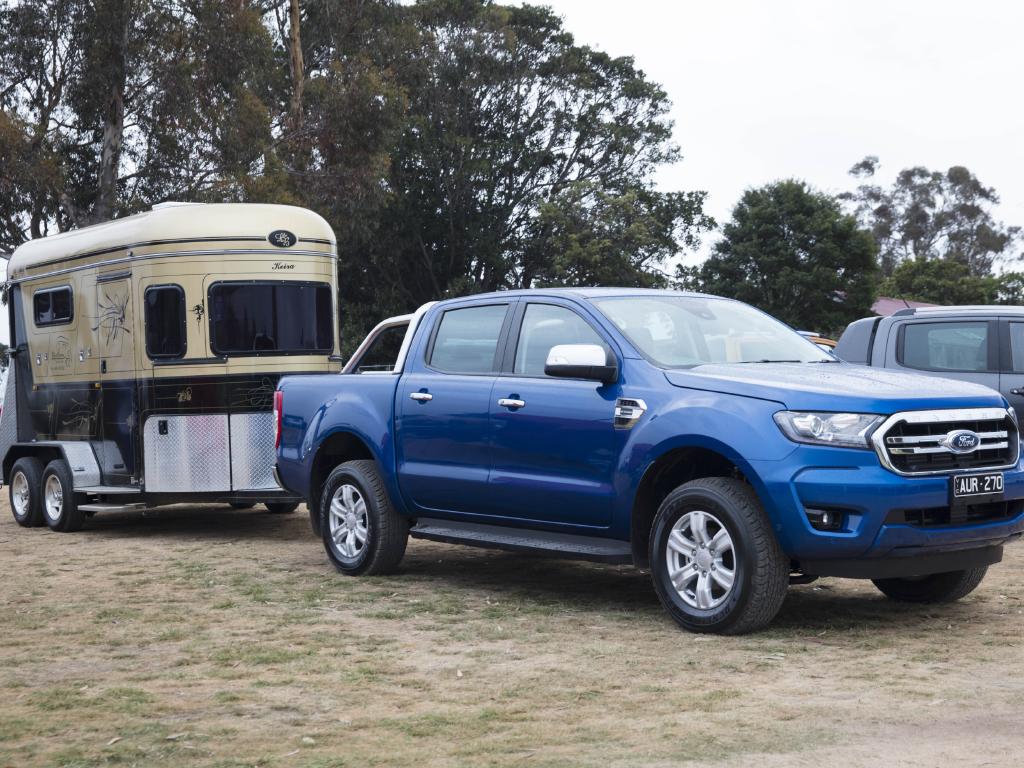
Ford Ranger
XLT 3.2-litre
No title, From: Supplied
Manufacturer’s claim: 3500kg
GCM minus GVM: 2800kg
Difference: -700kg
Toyota LandCruiser Prado GXL 2.8-litre
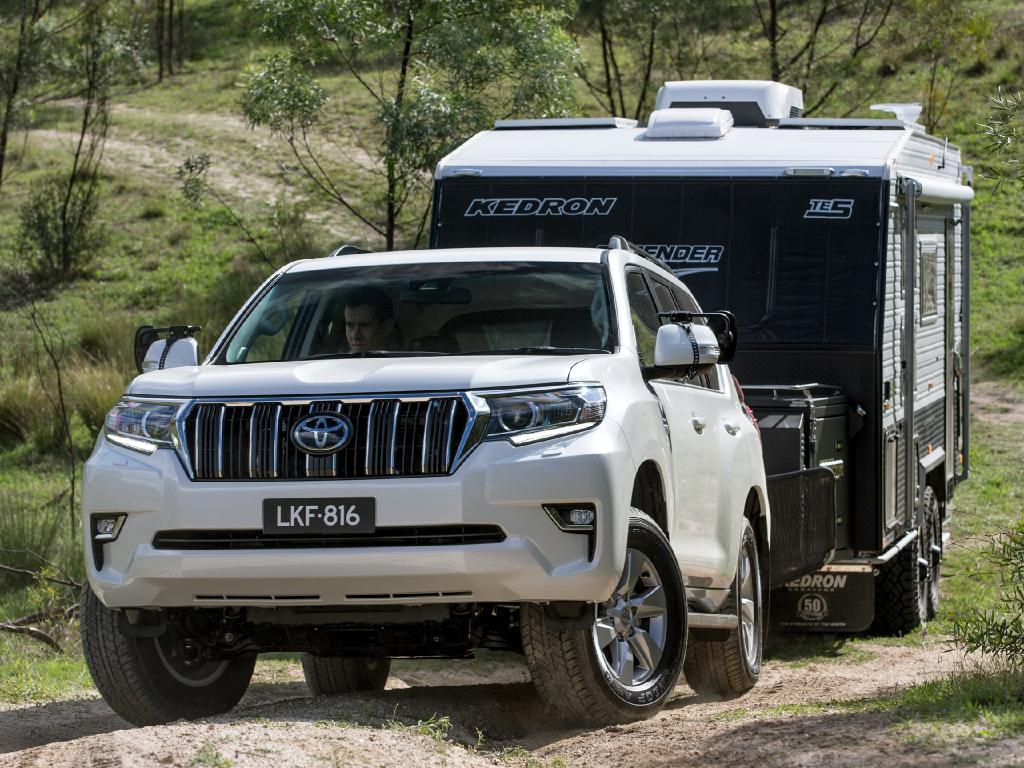
Manufacturer’s claim: 3000kg
GCM minus GVM: 3000kg
Difference: Zero
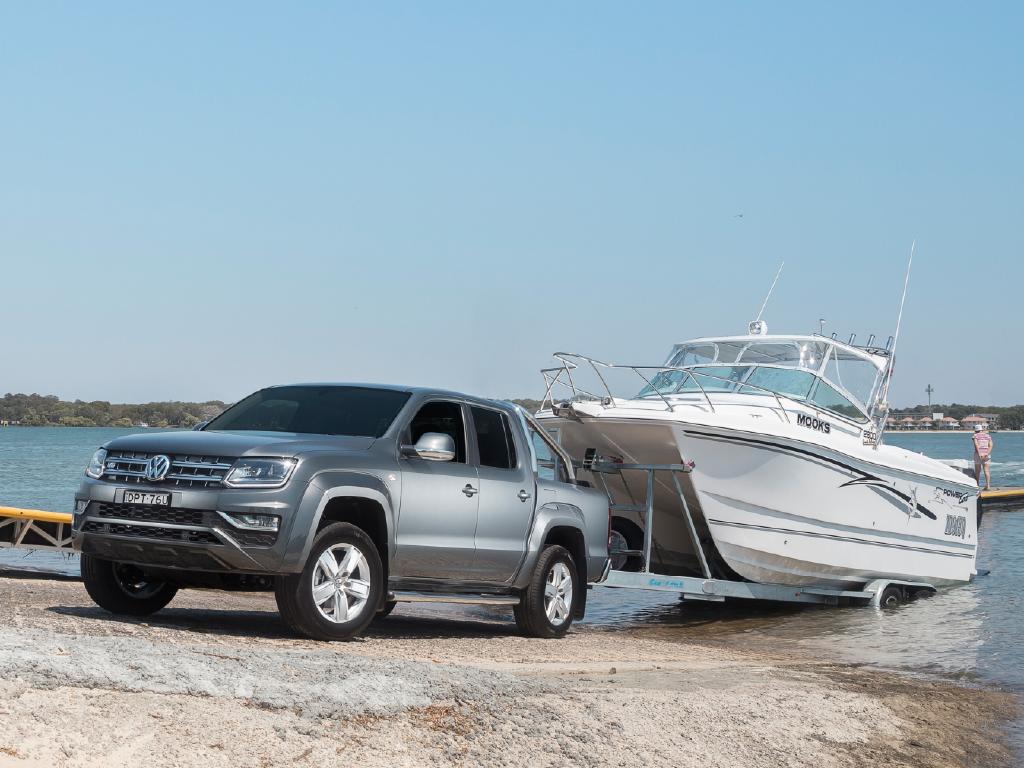
VW Amarok TDi580 3.0-litre
2018 Volkswagen Amarok V6 – 3.5 tonne
Manufacturer’s claim: 3500kg
GCM minus GVM: 2920kg
Difference: -580kg
Mitsubishi Triton GLS 2.4-litre
Manufacturer’s claim: 3100kg
GCM minus GVM: 2985kg
Difference: -115kg
Jeep Grand Cherokee Limited 3.0-litre V6
Manufacturer’s claim: 3500kg
CGM minus GVM: 3150kg
Difference: -350kg
Holden Colorado LTZ 2.8-litre
Manufacturer’s claim: 3500kg
GCM minus GVM: 2850kg
Difference: -650kg
Toyota 200 Series LandCruiser GXL 4.5-litre
Manufacturer’s claim: 3500kg
GCM minus GVM: 3500kg
Difference: Zero
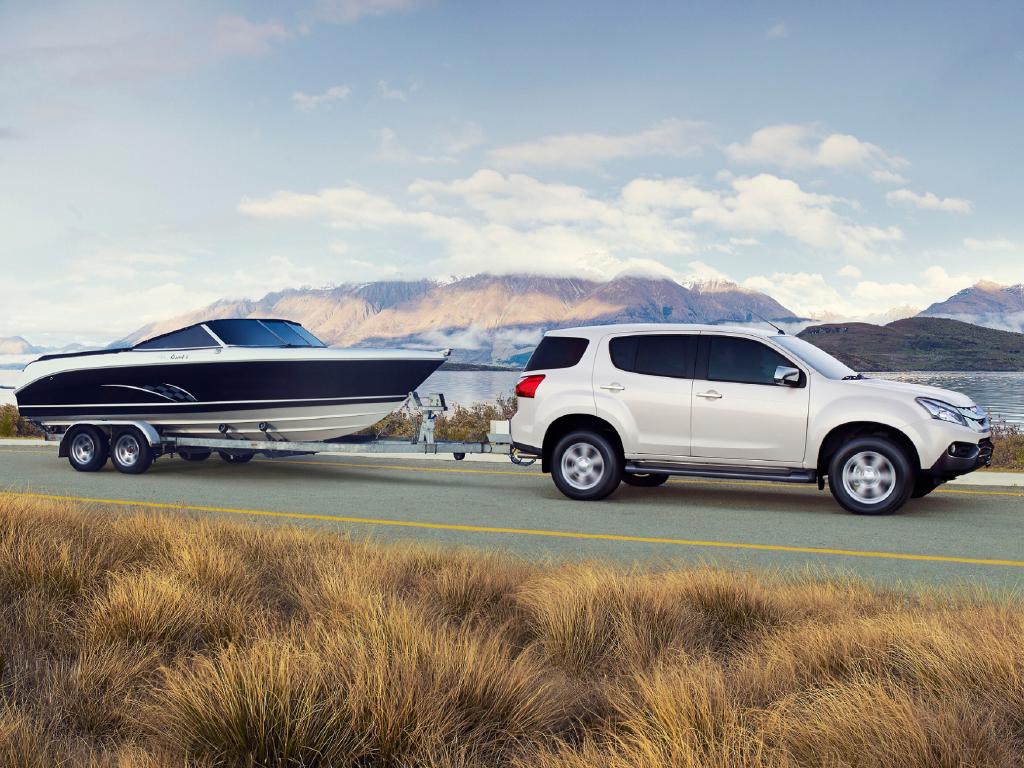
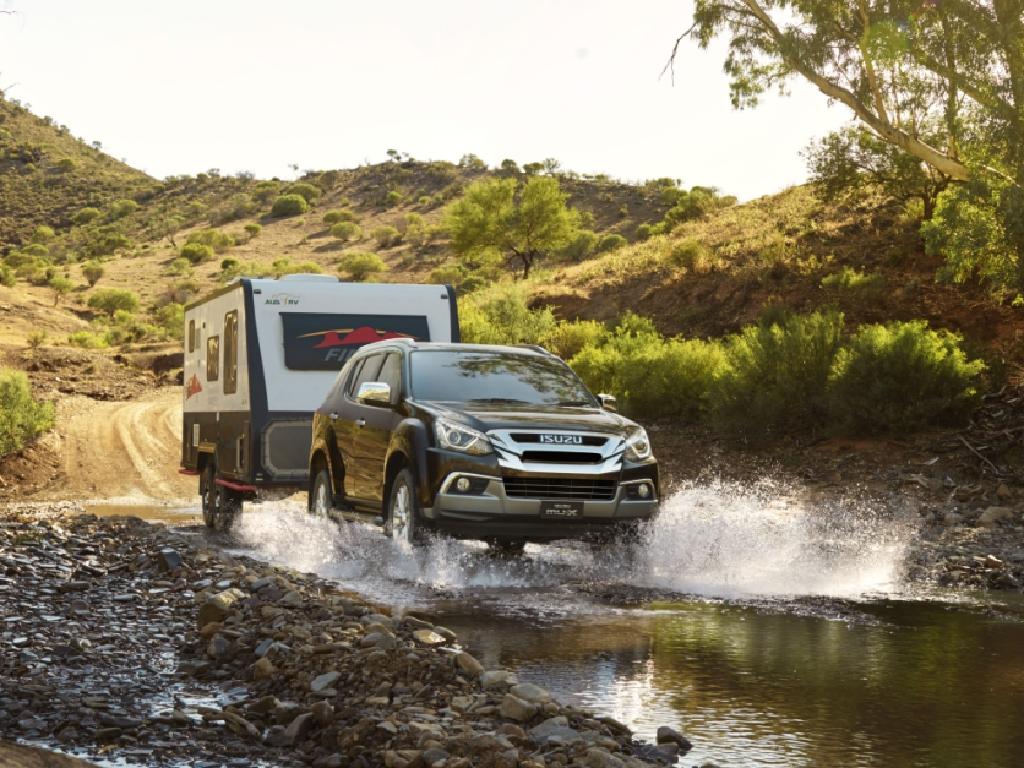
Isuzu MU-X
LSU 3.0-litre
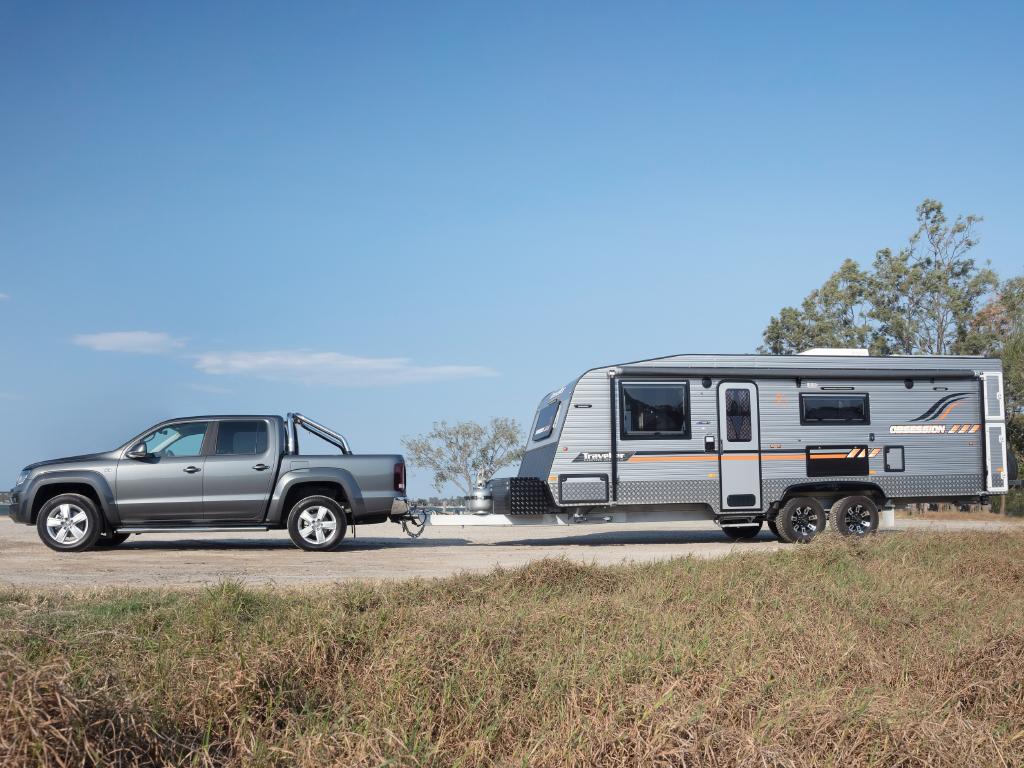
Generic towing shots for Bill McKinnon feature in
Manufacturer’s claim: 3000kg
GCM minus GVM: 3000kg
Difference: Zero
Mercedes-Benz X350d 3.0-litre V6
Manufacturer’s claim: 3500kg
GCM minus GVM: 2930kg
Difference: -570kg
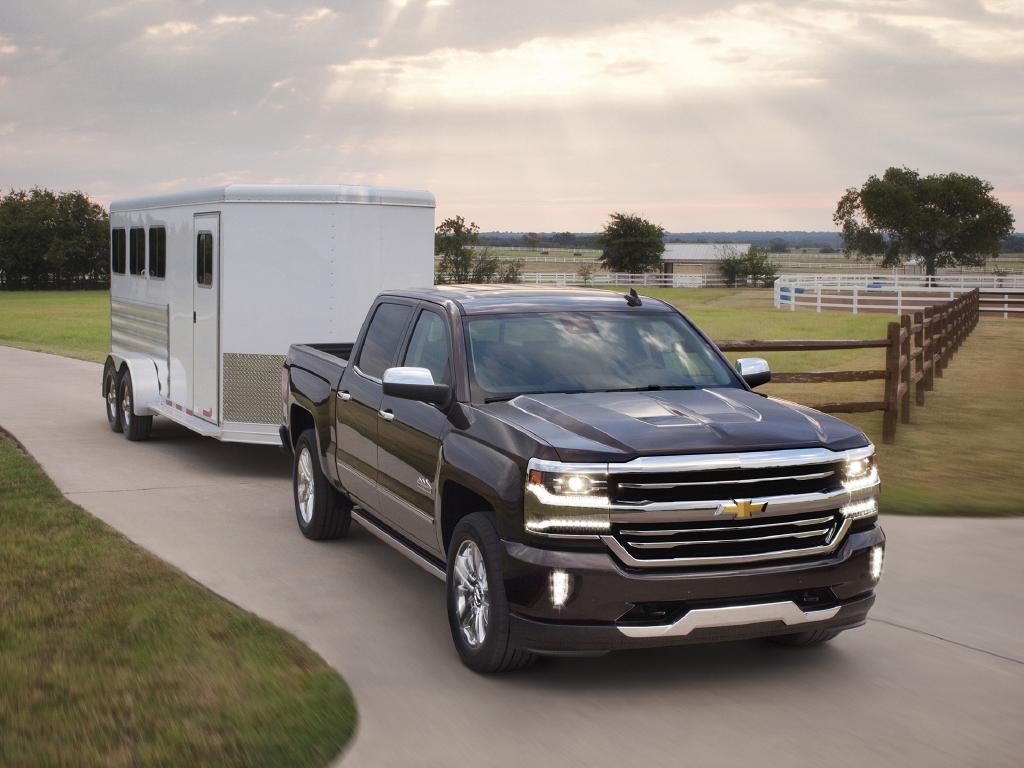
Chevrolet Silverado
2500HD 6.6-litre V8
2017 Chevrolet Silverado 1500 High Country
Manufacturer’s claim: 5890kg
GCM minus GVM: 5310kg
Difference: -580kg
All vehicles are turbo diesel automatics. One-tonners are dual-cab 4WDs
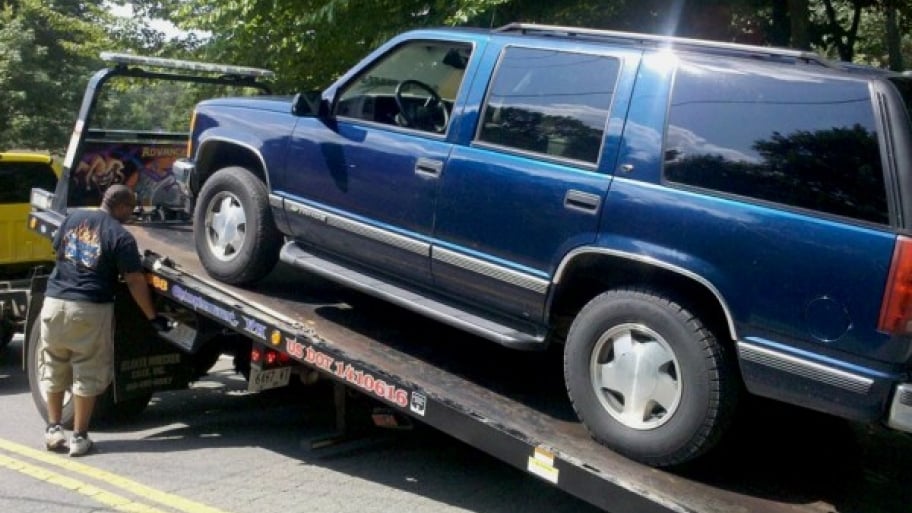
Whether you’ve had a wreck or a breakdown, before you call a towing company, check out these guidelines to get the most from your tow truck buck.
If you’ve been involved in a traffic accident and need your vehicle towed, you might not have much of a choice of who performs the service. Often emergency services such as police or fire departments dispatch the wrecker to the scene of an accident.
But in other scenarios such as one-car accidents, breakdowns, slide-offs or engine trouble, getting your car towed can be a less stressful experience with a little preliminary research on towing companies in your area.
Before you call a towing company, check out these guidelines to getting the most from your tow truck buck:
Research reputaton of tow company
Like any service, reputation matters when selecting the right towing provider for your vehicle. For instance, if you’re in a part of the country that receives frequent snowstorms that make for treacherous driving, research towing companies’ reputations online on Angie’s List.
Call around and ask for detail on pricing, including if the company accepts credit cards. Once you’ve found a reliable company with a good reputation place the number in your vehicle or add their number to your phone’s contacts list.
Don’t blindly trust a tow truck that just shows up
As stated above, you may not have much choice in who tows your vehicle if the company was dispatched by emergency services. But if you’re involved in slide-off or breakdown, be wary of any truck that shows up unannounced in an unmarked vehicle and offers to tow your car.
Reputable companies will display their federal Department of Transportation ID number on their truck, as well as any additional license numbers that may be required by local laws. These markings can indicate the company is insured to provide the work. If something goes wrong, you’re more likely to be covered by an insured, registered tow company.
Related Article
How Much Does a Tow Truck Cost?
Know what prices to expect when you call for a tow truck.
Snap a picture of your car
If you have a camera-equipped phone or a digital camera handy, capture some images of your vehicle’s condition before the tow truck driver arrives. The documentation may come in handy should any unexpected or unexplained damages occur en route to your car’s towed destination.
Sign paperwork wisely
When you sign off on the job paperwork, make sure your signature is nearby or right below the agreed-upon dollar amount. This will minimize the chances additional charges are added without your knowledge.
Get a receipt from tow truck company
Once the work is completed, don’t forget to get your copy of the invoice and your copy of the receipt to ensure you’re only billed for the charges you’ve authorized.
Insurance may cover tow
Depending on the situation, your insurance policy may cover vehicle towing in the case of an accident or break down. Insurance companies may even have preferred towing providers they can dispatch on your behalf. If you belong to a third-party assistance organization like AAA, be sure you understand your coverage.
Towing and recovery companies are called to all types of roadway incidents. Common roadways incidents include:
Vehicle breakdowns
Vehicle collisions with other vehicles, fixed objects, animals, or pedestrians
Run off the road (single vehicle crashes)
Load shift (cargo on roadwa)
Regardless of the type of incident, and who requested the service, once they arrive on-scene, towing and recovery companies are expected to: Ensure Site Safety
Approaching traffic should be warned of the incident. Flashing lights, flares, signs, barricades, cones and flaggers should be deployed as appropriate to prevent additional vehicles from becoming involved, and or additional incidents altogether. Sight distance to the incident as well as to overall recovery area must be considered and addressed in order to prevent additional vehicles from becoming involved.
Drivers, by-standers, responders, and anyone else must be protected from harm. Injury or death from fire, explosion, equipment failure or malfunction must be considered and addressed by establishing safe distances for those around.
On scene operators should, and in some cases are required by federal law to wear high visibility clothing as prescribed by ANSI 107-2010.
Property damage at the scene, including, but not limited to fluid debris on the roadway, soil contamination from fluid debris, damage to grass, trees, shrubs should all be identified and remediated.
Recover & Remove Vehicles from Incident Scene
Vehicles should be recovered and positioned for loading as appropriate for transportation away from the incident scene. This will often require the use of a winch and appropriate rigging (chains and other hardware). The tow truck, winch, and all necessary hardware must be properly sized and in good working order. Attachment to the casualty should be made to a structurally significant member. Movement of the casualty during winching must be anticipated and planned for to prevent damage or injury.
Vehicle manufacturers’ procedures for securing and towing should be followed to ensure damage free transport.
Provide Safe Keeping for Vehicles and Property
Vehicle damage sustained in a crash can lead to additional problems later on. Damage to a vehicle’s wiring can lead to a fire hours or even days after the initial crash. Damage to the passenger area or cargo area can leave the vehicle’s interior and or contents exposed to the elements. Thin film wrap (Crash Wrap) should be applied for protection.
With proper tools and training, Towing and Recovery Companies can fulfill their duties without adding to the damage or injuries.
FEATURED EXPERTS
Douglas J. Rowland, P.E.
Doug has spent most of his professional career around just about every conventional vehicle manufactured, from automobiles to buses to 50-ton recovery wreckers. He spent eight years as an engineer for Bendix Friction and was involved in reviewing contract specifications for Ford, Chrysler and General Motors vehicles for specific friction material applications, product design and plant start-up. A future engineering position had him providing engineering support for the manufacturer of steering columns for Nissan automobiles.
He was Operations Director for the Marsh Bus Company, which operated highway, transit and school buses, and he was a heavy vehicle operator for Capital Transcorp, providing contract-trucking services in New York. As a heavy vehicle recovery and towing technician for two different companies, he not only has operated a variety of recovery equipment, but he’s also provided on site analysis. He specialized in heavy truck accidents.
COLORADO SPRINGS, Colo. – Following Wednesday’s blizzard, many of you were stranded on the side of the road, forced to leave your car and have it towed. But were you surprised when you got the bill?
Scott Saunders, a Monument native, says he was shocked after being charged $512 from Randy’s Towing.
“I was so outraged over this,” said Saunders, standing along the Baptist Road onramp pointing to where his car got stuck. “I was there for four-and-a-half hours and traffic never moved.”
Saunders is just one of the hundreds stuck in the same position and facing a hefty bill.
KRDO reached out to Randy’s Towing and learned the high prices are a result of what’s called a “law enforcement rate.”
According to the Colorado Public Utilities Commission (CPUC), law enforcement tows start at $205 per hour, not including any additional fees.
For example, that price spikes for any of the following, according to the CPUC:
$30.00 per day of storage
$66.00 after hour pickup
$150.00 between 48 hours and 10 days – Vehicle Search and Notification
KRDO investigated complaints of certain tow companies gouging prices.
“I’m really frustrated with the whole process … I think it’s ridiculous,” said Matt Boudreau.
For example, Boudreau said he was charged $189.25 for a tow from Briargate to E. Las Vegas Street. Whereas, Saunders paid well over twice that amount for a tow from Baptist just a few miles further up the road.
We asked management at Randy’s Towing for a comment. Although they didn’t want to go on camera, they did point out they waived the storage fee and are trying everything they can to lower prices.
Since our story aired, Randy’s Towing offered to take another look at receipts from customers who feel they were overcharged to negotiate a fair rate.
DO YOUR CHECKS
Like a pilot running through their pre-flight checks, you should always run through pre-towing checks. It’s too easy to become distracted or to be in a situation where you’re hurrying (such as packing up camp in in the pouring rain) and miss something that will come back to bite you when towing down the highway. These checks will take you less than a couple of minutes.
Scan your eyes over the coupling to ensure it is properly connected, that the safety chains and the break-away wire are secure, and that the trailer plug is plugged in.
do your checks
Then check that the handbrake is released and that the gas cylinders are turned off.
Make sure that the weight distribution hitch (if applicable) is secure, ten-sioned and that the safety pins are in place.
Walk around the van, checking that all windows are closed, wheel chocks are removed and the corner stabiliser legs are raised.
Stand back and look at the top of the van to ensure that hatches and the antenna are secured.
Take a quick peek inside the van to see that everything is battened down and, finally, ask your better half to check that the van’s taillights are working, and you’re done.
BACKING UP THE EASY WAY
When reversing a caravan, it is crucial to take your time. First, scan the area you’re about to back into. Are there any low branches, taps or other hard-to-see obstacles on the ground? Then, while still moving forwards, angle the vehicle and van roughly where you want the van to go when you start backing up. In other words, while driving forwards past the point where you want the van to go, turn the vehicle to the same side as you want the van to reverse back. This gets the vehicle and van in an open ‘V’ shape, all ready for reversing.
backing up2
Then, it’s a matter of remembering to turn the wheel to the opposite way you want the van to go, and slowly creeping backwards. Don’t reverse quickly – the slower, the better, with as small steering inputs as possible.
If it’s all going to pot, the best thing is to pull the rig forward a few metres and go again.
If you have a spotter, get them to use hand signals you’ve already agreed on, but if you’re by yourself, get out and check what’s behind and above your van, several times if necessary.
LOOK AHEAD AND KEEP WIDE
If you’re in town on a narrow, cambered road, always look ahead for shop awnings or vertical posts close to the road and give them a wide berth. Narrow city lanes can be nerve-wracking when you’re sandwiched between two trucks that have their side mirrors in your lane.
look ahead and keep wide
Go slowly and try to avoid being in between two other wide vehicles in the first place. If you’re on a narrow, multi-lane urban road and it’s practical to do so, stay in the outside lane. Often there will be a centre median strip, which may give you some more room on the left. Just keep an eye out for traffic light poles and other potential obstructions on the median strip.
Remember to keep a greater distance between you and the vehicle ahead than you would when not towing, both in town and on the open road.
RUN WIDE ON CORNERS
When turning a corner, the caravan will take a shorter path around the corner than the vehicle, therefore ‘cutting in’. This problem can be countered by taking the widest path possible around the corner.
Begin by moving your rig as close as you can to your side of the centre line (of a two-lane road) before the turn, and turn as late as possible and as wide as possible. You will soon develop a feel for it and realise that at times (such as on narrow suburban roads) the only way you will make the corner is to use both sides of the road.
run wide around corners2
In such cases, it’s best to simply stop and wait until oncoming traffic has passed. If the combined length of your van and vehicle is 7.5m or greater, you can affix a sign to the rear advising other vehicles not to overtake while you are turning, which legally allows you to straddle two lanes on a multi-lane road just prior to a turn.
Roundabouts also require a different steering technique than when not towing, by turning later than you normally would to allow room for the van to stay in the lane.
COUNTERING SWAY
Towing at speed with a caravan swaying behind can be terrifying, but there are a few techniques for avoiding sway in the first place. Load your van so that it’s properly balanced, for starters. Use a weight distribution hitch if necessary, and make sure the tyre pressures are correct. When passing (or being passed by) large vehicles, keep as wide a berth as possible, so that the air being disturbed around them doesn’t affect your rig.
countering sway
Pay attention to signs warning of a high wind area ahead and slow down in preparation.
If you are being overtaken by a large vehicle and can’t move over enough, slow down a little as the vehicle passes. If your van does begin to sway, gently ease off the accelerator. Once you’ve reduced speed by 10-15km/h, apply the electric brake override and accelerate. This will pull the rig straight, stopping the sway. Having an electronic stability control system installed will largely automate this process for you.
The majority of the driving population — those whose vehicles are having a good day, anyway — takes a lot of things for granted. Their vehicles speed up, slow down, back up and turn when they require them to and with relative ease. Barring a slick road or other natural interruption, everything usually goes as planned. But if you add a couple thousand pounds onto the back in an independent vehicle, everything gets a little more complicated.
This additional weight makes itself known during almost every stage of a trip, but perhaps none so much as when you need to hit the brakes. One of the reasons braking while towing is such a challenge stems from the notion of inertia — because nobody likes change, right? Inertia means objects feel the same way; if something is resting, it tends to stay at rest. If something is moving, it tends to stay moving unless another force interferes with its motion. Braking a trailer, especially if it doesn’t have any brakes of its own, is messing with its inertia in a big way. The tow vehicle might be slowing down, but the trailer is still raring to go, and this can cause it to swing dangerously. Also, any cargo that’s not strapped down will probably go flying.
Whether you’ve never towed anything before or you have but you’re a little unsure about a new load, an important consideration to remember is that it never hurts to practice. Take a spin around some back roads where traffic is light and do a little experimenting. As you drive along, get a feel for how long it takes you to stop and how your trailer responds to braking at different speeds.
Another thing to note is that the advice of someone with experience in towing can be invaluable for a beginner or even a veteran who needs a refresher. Plus, there’s always the chance he or she might have some gripping tales of emergency braking nightmares that’ll scare you into taking it slow the first time.
The need for roadside assistance may happen at any time of the day. Whether you’ve suffered a mechanical failure or an accident, getting trapped in the middle of the road, with several other worst situations associated is one of the overwhelming conditions.
Depending on the size and type of vehicle to be towed, five common types of towing equipments are used namely:
Boom
Hook and chain
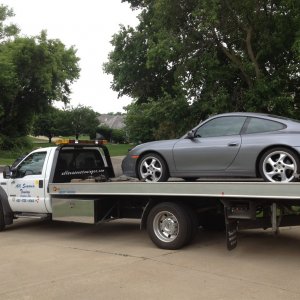
Flat bed
Integrated
Wheel lift
Boom is a piece of equipment that is widely used on several types of tow truck. Even though not a specific type, this adjustable winch device helps vehicle recovery from an embankment, culvert or ditch. It also include place the automobile cannot be safely backed-up to.
Usually referred to as sling or belt lift, this is yet another equipment used for a vehicle recovery. In view of the fact that, slings can cause scratches to bumpers, they are not used much these days. In the region of the vehicle frame or axle, chains are looped, which is drawn uphill by a boom winch to rest adjacent to a pair of heavy rubberized mats such that the vehicle can be towed on its other axle. Though not used these days, vehicles that are caught up by accidents, or that have one or two of the front or rear wheels gone or for lift up trucks and other vehicles that have steel bumpers, slings are considered. Seeing that car’s drive train can cause certain issues, autos outfitted with all-wheel drive cannot be towed with the help of a sling.
As with flatbeds, the back of the truck is fixed with a bed that can be hydraulically leaned and moved to floor level, allowing the vehicle being hauled to be placed on it under its own power or pulled by a winch. Integrated and wheel lift are other common towing equipments used to tow an auto or caravan. Having said all that, with regards to these types of services there are several state rules and laws that impede in the course of action involved.
What you might not know about getting towed
Depending on the state laws and rules related to towing there are possibilities that access to your car in the garage may be restricted. This is a good reminder that you don’t carry original documents or store important stuff in your car. In case of an accident and your car being towed, you might not have immediate access to those items inside the car.
It is highly recommended that you sign up for a licensed towing atlanta firm, in case if you are in an accident or break down on the highway. You may not call your own tow truck.
Man’s inventiveness by no means comes to an end to flabbergast. With regards to transportation, modern generation towing truckideas are something unimaginable. Having said that, knowing how these tow experts move the modern world’s most massive structures can be even more wonderful! Braking, turning and even parking becomes more intricate with these bulky structures and towing them is even more complicated. In general, towing itself is a difficult task and do you know the heaviest tows that tow operators have to deal with? This piece of writing will help you come across the most voluminous and difficult tows that tow operators face.
Bigger and bigger structures have already hit the road and it is no doubt that even bigger structures are yet to be engineered. The fact is that, as engineers come up with such creations, they also discover clever and powerful vehicles that will help to tow them. Each of them poses their own challenges, involving monumental weight and proportions. Let us see the bulkiest structures that are difficult to tow.
Concrete pumps
Mobile cranes
Mobile drill rigs
Refuse trucks
Of all other voluminous structures, concrete pumps are one of the most difficult trailers to haul. Classified under the category of a multi-axle giant, just about 35k lbs, on the steer axle, this comes under the most difficult to haul truck.
Mobile cranes are yet another truck, seeing that, there are different varieties in it, based on the size of the crane and its capacity together with the dimension, they are towed and as a matter of fact these machines can have gross weights well over 150,000lbs.
Oil and natural gas trucks are yet another automobile that acts as a great challenge for towing. Weighing 100,000-lb range, rigs used in oil drilling and natural gas are a real heavy-duty challenge.
Front-loading packer trucks filled with wet garbage are also a tough challenge to tow and it has the reputation of being the most difficult ones since it has some external hydraulic pump components mounted on the front as well.
With so much of complications, it is always very important to select the right and professional towing company who will be of service to you at this toughest part of life. Towing rankings is a one-stop place where your towing needs are met. Helping you come across the most professional and dependable towing companies, you can also read towing reviews and rankings about them gathered from customers.


 Towing Services Guide